

Table of Contents
If you are searching for should i use endbugflow software for making music, the first thing to establish is what Endbugflow actually is. This matters because online descriptions of the name are inconsistent. Endbugflow’s own website currently presents itself around debugging, software-development workflows, technical concepts, and workflow optimization rather than as a dedicated music-production platform.
That distinction is important for musicians. Making music generally requires an environment capable of recording or importing audio, arranging tracks, working with MIDI, applying effects, editing sound, managing instruments, and exporting finished projects. A digital audio workstation, or DAW, is designed around those requirements.
Some third-party websites have described Endbugflow as an audio environment or music-production tool, but those claims are difficult to reconcile with the information available on the Endbugflow website itself. Other recent research also notes that the public documentation does not clearly establish a conventional, fully documented commercial software product with comprehensive technical specifications.
For that reason, the safest answer is that you should not assume Endbugflow is suitable as your main music-making program. Before choosing it for recording, beat production, mixing, or mastering, verify that the specific software you are considering is an authentic, documented audio application with the features you need.
This guide explains what the available evidence shows, what musicians should look for in music creation software, and how to evaluate Endbugflow without relying on unsupported claims.
What Is Endbugflow Software?
Endbugflow’s official website describes the platform as being focused on end-to-end debugging and workflow optimization. Its published material discusses software-development complexity, debugging methods, technical concepts, root-cause analysis, and development workflows.
The website also contains an “Endbugflow Software” section and articles discussing the software name. However, the publicly presented material does not establish Endbugflow as a conventional DAW comparable to established music-production applications.
This creates an important distinction between the Endbugflow name and the specific functions that a musician might expect from music making software.
| Requirement | What a music producer generally needs | Endbugflow evidence |
| Audio recording | Recording microphone or instrument input | Not clearly documented on the official site |
| Multitrack arrangement | Multiple tracks arranged on a timeline | Not clearly documented |
| MIDI editing | Piano roll, MIDI instruments and sequencing | Not clearly documented |
| Audio effects | EQ, compression, reverb and other processing | Not clearly documented |
| Virtual instruments | Synthesizers, samplers or instrument plugins | Not clearly documented |
| Mixing | Track routing, volume, panning and automation | Not clearly documented |
| Mastering | Final processing and export workflow | Not clearly documented |
| Debugging workflows | Software-development troubleshooting | Explicitly presented by the official website |
The last distinction is particularly important. Endbugflow’s official website emphasizes debugging and software-development workflows, while a music-production application needs to document its audio capabilities clearly.
Should I Use Endbugflow Software for Making Music?
For someone looking for a primary music-production application, the evidence does not provide a strong basis for choosing Endbugflow.
The reason is not simply that another program might be more popular. The more fundamental issue is that the publicly available first-party information does not clearly document Endbugflow as a DAW or complete music-production environment.
A musician should be able to determine basic questions before committing to software. Can it record audio? Does it support MIDI? Can it arrange multiple tracks? Does it provide mixing controls? Can it load instruments or effects? Can it export finished audio? Is there official documentation explaining these capabilities?
Those questions are especially important for beginners because choosing software that does not match the intended task can create unnecessary complexity.
Endbugflow may be relevant to software developers working on music technology, debugging applications, or managing technical workflows. That is different from using it to create a song.
The distinction can be summarized simply: software used to develop or troubleshoot music technology is not necessarily software used to produce music.
Why the Endbugflow Information Online Is Confusing
One of the biggest challenges with researching Endbugflow is that different websites describe it in very different ways.
The official Endbugflow website describes itself as a technical platform centered on debugging, workflow optimization, and software-development knowledge.
Some third-party pages, however, describe Endbugflow as a bug-management or development tool. Others make much stronger claims about audio production. One page describes it as a modular, node-based audio environment, while another describes it as software for debugging and development.
These descriptions cannot simply be treated as equally reliable.
For example, a third-party article may claim that Endbugflow supports particular audio functions, plugins, operating systems, or routing capabilities. Unless those features can be confirmed through authoritative product documentation, they should be regarded as claims rather than established facts.
This is particularly relevant when researching Endbugflow music making software. A search result appearing to describe music functionality does not automatically prove that the software is officially designed for musicians.
What Should Music Production Software Actually Provide?
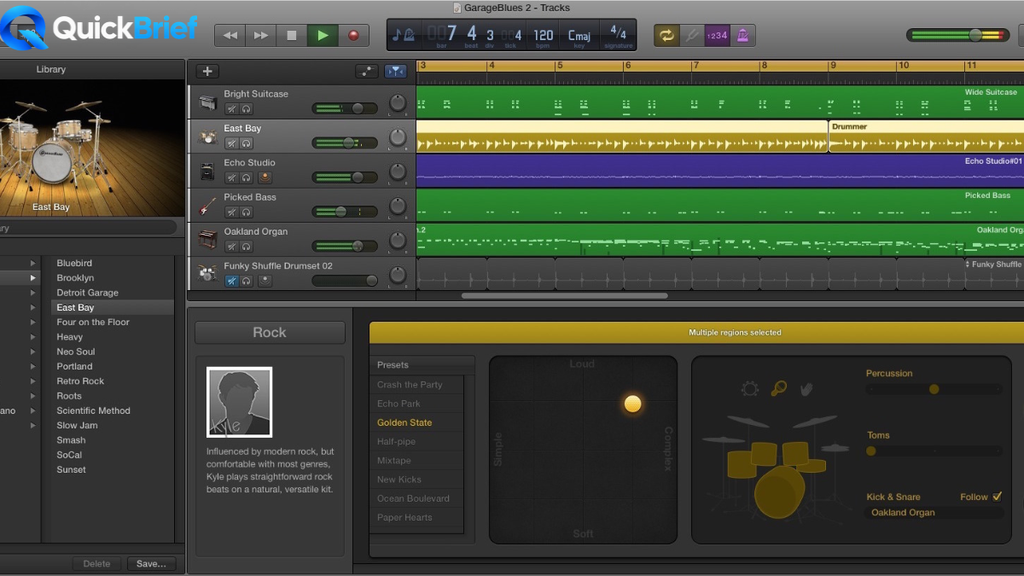
To decide whether any program is appropriate for music production, it helps to understand the basic capabilities expected from modern audio-production software.
Audio Recording
Recording is fundamental for musicians working with vocals, guitars, keyboards, microphones, instruments, or external hardware.
A suitable application should provide a reliable way to capture audio, select inputs, monitor recordings, manage takes, and place recorded material into a project.
If a program does not clearly document audio recording, it should not automatically be considered music recording and editing software.
Multitrack Arrangement
Music production usually involves multiple elements. A song might contain drums, bass, vocals, guitars, keyboards, effects, samples, and other parts.
A DAW normally provides a timeline where these elements can be arranged and edited. This makes it possible to construct a complete song rather than simply manipulate an isolated sound.
MIDI and Virtual Instruments
MIDI allows producers to work with digital instruments and musical performances without necessarily recording traditional audio.
For example, a producer might program a drum pattern, play a virtual piano, or control a synthesizer from a MIDI keyboard.
A serious music production workflow often depends heavily on MIDI, especially for electronic music, beat production, orchestration, and software instruments.
Mixing and Effects
Once tracks have been recorded or programmed, they normally need to be mixed.
Mixing can involve balancing volume, positioning sounds across the stereo field, equalization, dynamics processing, effects, routing, and automation.
Common audio-production tools include equalizers, compressors, reverbs, delays, distortion effects, and limiters.
These capabilities are central to music production, not optional extras.
Exporting Finished Music
A music-production environment also needs a dependable way to render or export completed work.
Depending on the project, a producer may need an audio file suitable for listening, sharing, video production, or further mastering.
A platform that does not clearly document a complete audio-production and export workflow should be approached cautiously when the goal is making finished music.
Endbugflow for Music Production: What Is Actually Confirmed?
The most defensible approach is to separate confirmed information from online speculation.
Endbugflow’s own website explicitly presents material around debugging, technical concepts, workflow optimization, and software development.
At the same time, some independent websites have published articles portraying Endbugflow as music-related software. These articles make claims about audio routing, music production, or other audio functionality, but the claims are not consistently supported by authoritative Endbugflow documentation.
That means a reader should not treat statements such as “Endbugflow is a DAW” or “Endbugflow supports a particular audio plugin format” as established facts without verifying them directly.
This uncertainty is itself useful information. When software documentation is unclear, the responsible approach is to investigate the developer, official documentation, licensing information, supported platforms, privacy information, release history, and actual product documentation before installing or relying on the program.
Endbugflow Audio Editing Software: Is It a Good Fit?
The phrase Endbugflow audio editing software suggests that Endbugflow could be used for editing recordings, but the official information currently available does not clearly establish it as a dedicated audio editor.
Audio editing and debugging are fundamentally different activities.
An audio editor works with sound files and provides functions such as cutting, trimming, fading, noise processing, level adjustment, waveform editing, and exporting.
Debugging software, by contrast, deals with software problems, technical information, development workflows, and system behavior.
Confusing these categories can lead to poor software choices.
If your main goal is to edit vocals, cut recordings, clean audio, arrange samples, or produce finished songs, look specifically for software whose official documentation describes those functions.
Endbugflow for Creating Beats
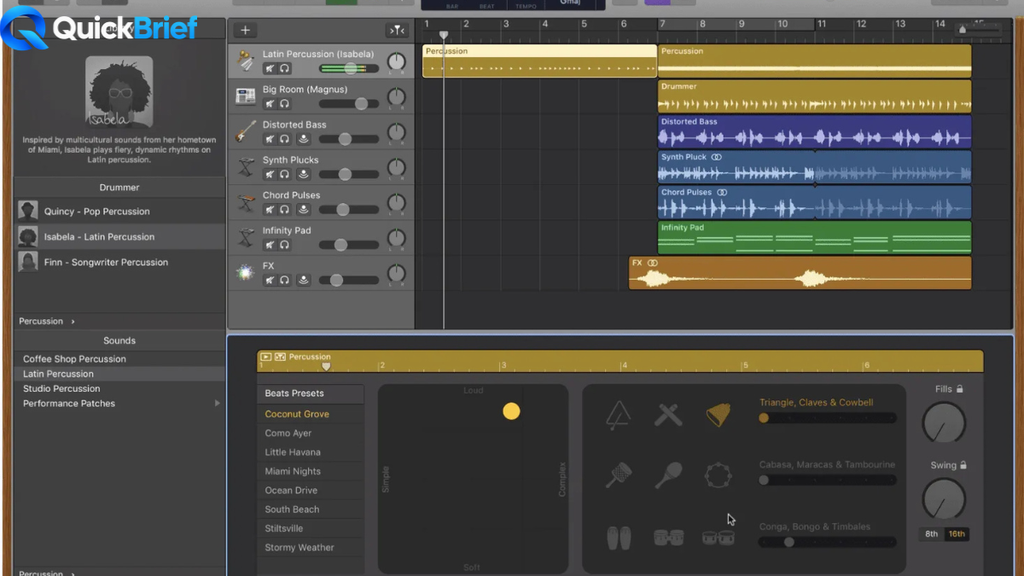
Beat production creates another useful test.
A beat-making application normally needs a way to sequence drums and other musical elements. Producers may expect a piano roll, step sequencer, drum sampler, MIDI support, quantization, tempo controls, looping, and sound libraries.
These features are part of what makes dedicated music-production software practical.
The available official Endbugflow information does not clearly document those capabilities. Therefore, it would be premature to describe Endbugflow as established software for making beats.
Third-party pages may make different claims, but the conflict between those descriptions is precisely why musicians should verify product capabilities rather than relying on search-result summaries.
Endbugflow for Beginners
For beginners, clarity is particularly important.
Someone learning music production usually benefits from software with understandable documentation, tutorials, a stable workflow, predictable project management, and clearly explained audio features.
The best beginner choice is not necessarily the program with the most features. It is software whose purpose and capabilities are clear enough that a new producer can learn without constantly questioning whether the application supports basic production tasks.
That is another reason to be cautious about treating Endbugflow as beginner music production software when its publicly documented identity is centered elsewhere.
A beginner researching is Endbugflow good for music production should first establish whether the software is actually intended and documented for that purpose.
Endbugflow vs Other Music Software
A useful comparison should focus on software categories rather than unsupported claims about Endbugflow.
| Category | Main purpose | Typical music-production role |
| DAW | Recording, arranging, editing and mixing | Central production environment |
| Audio editor | Editing individual sound files | Recording cleanup and detailed editing |
| MIDI workstation | Sequencing instruments and MIDI performances | Beat making and electronic production |
| Plugin host | Running audio instruments and effects | Sound design and processing |
| Debugging software | Finding and investigating software problems | Development and technical troubleshooting |
| Workflow software | Organizing technical or business processes | Project and task management |
This comparison shows why terminology matters. A product can be useful in the technology industry without being a suitable replacement for a DAW.
When Could Endbugflow Be Relevant to Music Technology?
There is a difference between making music and building music technology.
A developer creating a music application may need debugging tools. A company developing an audio plugin may need software-development workflows. A QA team testing an online music platform may use technical troubleshooting tools.
In those situations, a debugging or workflow platform could potentially be part of the broader technology process.
That does not make it a music-production application.
For example, a developer could work on a digital audio application while using separate development software to identify coding problems. The development tool supports the creation of the music application; it does not necessarily create the music itself.
This distinction gives Endbugflow a potentially relevant place in the broader technology ecosystem without requiring unsupported claims about its audio-production capabilities.
What to Check Before Downloading Endbugflow
Because online information about Endbugflow is inconsistent, verification should come before installation.
Check whether the software has an identifiable official publisher and documentation. Confirm that the download comes from a trustworthy official source rather than an unrelated download website. Review what operating systems are officially supported and whether the current version is documented.
For music production specifically, look for clear documentation covering audio recording, MIDI, multitrack projects, effects, plugin compatibility, audio routing, project saving, and export formats.
Also consider privacy and security. If software asks for access to files, accounts, repositories, microphones, or other system resources, understand why that permission is necessary before granting it.
These checks are useful for any unfamiliar application, not just Endbugflow.
Common Misconceptions About Endbugflow
One misconception is that every website discussing Endbugflow is describing the same product. The current public information does not make that assumption safe.
Another misconception is that a search result containing the phrase “music production” proves that Endbugflow is officially music-production software. Search results can come from independent websites whose claims are not necessarily endorsed by the product’s publisher.
A third misconception is that technical workflow software and music-production software are interchangeable. They are not. Their purposes, interfaces, data models, and core functions can be completely different.
Finally, a lack of easily verifiable information should not be interpreted as proof that a particular feature definitely does not exist. It means the feature has not been sufficiently established by the sources reviewed.
A Practical Decision Framework
If your purpose is songwriting, beat making, recording vocals, arranging instruments, mixing tracks, or preparing a finished song, start by looking for a dedicated DAW or established music-production application.
If your purpose is debugging software, investigating technical problems, or organizing development workflows, Endbugflow’s publicly described focus is much more relevant.
If you are interested in using Endbugflow specifically because another website claims it is an audio environment, verify those claims against authoritative documentation before changing your workflow.
This approach avoids making a decision based solely on the name of a product or on an article written by an unrelated website.
My Opinion on Should I Use Endbugflow Software for Making Music
Based on the publicly verifiable information available, I would treat Endbugflow cautiously as a music-production option.
The main issue is not that an unfamiliar tool cannot be useful. New creative software can certainly offer different approaches to music creation. The problem here is that the official Endbugflow website currently presents a strong focus on debugging and software-development workflows, while third-party descriptions of its supposed audio capabilities vary considerably.
For a musician choosing a primary production environment, clear documentation matters. You need to know what the software records, edits, supports, exports, and integrates with before building a workflow around it.
Therefore, I would not treat Endbugflow as a confirmed replacement for dedicated music production software based on the evidence currently available. If you encounter a specific Endbugflow download that claims to be a music-production application, verify its publisher and documentation independently before relying on it.
The most useful conclusion is not simply whether the name sounds suitable. It is whether the exact software you are considering provides the documented audio functions your music workflow requires.
Frequently Asked Questions About Should I Use Endbugflow Software for Making Music
Is Endbugflow software designed for making music?
The official Endbugflow website currently emphasizes debugging, software development, technical concepts, and workflow optimization rather than presenting Endbugflow as a dedicated DAW.
Is Endbugflow a digital audio workstation?
There is not enough authoritative public information reviewed here to establish Endbugflow as a conventional digital audio workstation. Some third-party websites describe it differently, so those claims should be independently verified.
Can I use Endbugflow for creating beats?
The available first-party information does not clearly document beat-making features such as a drum sequencer, piano roll, MIDI workflow, or dedicated music-production environment. It therefore should not automatically be treated as beat-making software.
Is Endbugflow good for beginners in music production?
A beginner should choose software with clearly documented recording, arrangement, MIDI, mixing, effects, and export capabilities. Because Endbugflow’s publicly documented purpose is not clearly centered on music production, its suitability for a beginner music workflow is uncertain.
What should I look for instead of Endbugflow for music production?
Look for established music-production software that clearly documents DAW functions such as audio recording, multitrack arrangement, MIDI sequencing, virtual instruments, effects, mixing, automation, and audio export. The right choice depends on your operating system, experience, music style, and workflow.
Conclusion
The question should i use endbugflow software for making music requires more caution than a simple yes-or-no search result might suggest.
Endbugflow’s official website currently focuses on debugging, software-development knowledge, and workflow optimization. Meanwhile, several third-party websites make conflicting claims about what Endbugflow is and whether it has audio-production capabilities.
For someone producing music, the important question is whether the exact application provides documented audio-production functions such as recording, MIDI sequencing, multitrack arrangement, sound editing, mixing, effects, and export.
Until those capabilities can be verified through authoritative documentation, Endbugflow should not be assumed to be a dedicated music-production platform or a replacement for a DAW.
The safest approach is to verify the exact product, publisher, documentation, and features before making it part of your music production workflow and more.
