

Table of Contents
Introduction
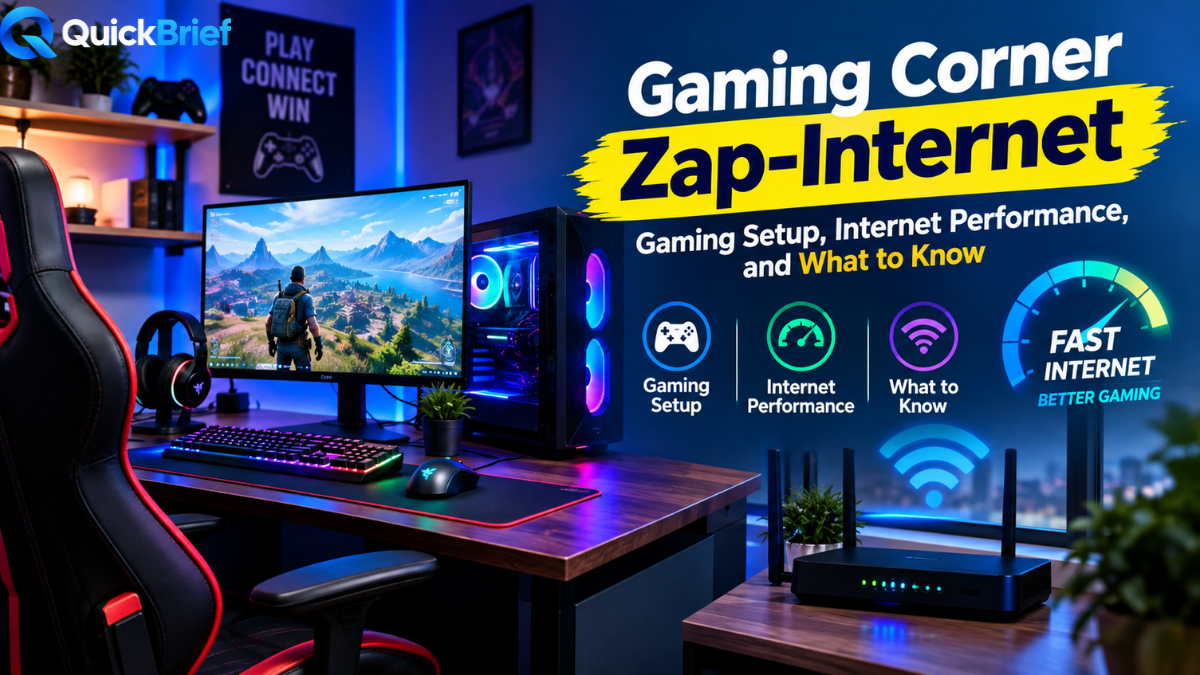
Gaming corner zap-internet is a search phrase that can be confusing because it sounds like the name of a specific gaming technology, internet service, or networking standard. Available online material uses the phrase in connection with a Gaming Corner concept published by ZAP Internet, including content about gaming spaces, connectivity, hardware, and community-oriented gaming environments. However, the phrase itself should not be treated as a universally recognized technical standard like fibre internet, Ethernet, Wi-Fi, or a particular networking protocol.
For Canadian gamers, the more useful way to understand the concept is to look at the relationship between a dedicated gaming environment and the internet connection supporting it. A modern gaming setup is influenced by much more than the speed advertised by an internet provider. Latency, jitter, packet loss, network congestion, router performance, Wi-Fi quality, physical distance to game servers, and the number of devices sharing a connection can all affect online gaming.
This makes gaming corner zap-internet an interesting topic for anyone researching gaming setups, online gaming trends, gaming technology, or ways to create a more reliable gaming experience. This guide explains what the phrase appears to represent, how internet performance affects gaming, what Canadian players should consider, and how to evaluate a gaming setup without relying on marketing claims alone.
What Is Gaming Corner Zap-Internet?
The simplest interpretation of gaming corner zap-internet is a combination of two ideas: a dedicated gaming environment and an internet connection designed to support online play.
The “gaming corner” part can refer to a physical station containing equipment such as a gaming PC or console, monitor or television, controller, keyboard, mouse, headset, desk, chair, and other accessories. The internet component refers to the network infrastructure connecting that equipment to online game servers and other internet services.
ZAP Internet currently has pages using the Gaming Corner terminology. One published page describes Gaming Corner Zap-Internet as a local gaming hub combining internet connectivity, shared hardware, and organized gaming activities. Another page presents the concept around social play and local esports. These descriptions show that the phrase is being used as a branded or editorial concept rather than as an established technical specification.
That distinction matters. A reader should not automatically assume that searching for gaming corner zap-internet identifies a particular internet plan with guaranteed ping, a dedicated routing system, or a universal set of hardware requirements.
A better approach is to examine the actual characteristics behind a good gaming setup. If the goal is smoother online play, the important questions concern connection stability, latency, packet loss, bandwidth, router configuration, hardware capability, and the location of the game server.
Why Internet Performance Matters for Online Gaming
Online gaming depends on communication between a player’s device and remote infrastructure. During a multiplayer match, information continually travels between the game client and its server.
When that communication is delayed or interrupted, the player may notice delayed actions, movement inconsistencies, disconnections, or other forms of poor network responsiveness.
One of the most commonly discussed measurements is latency, often displayed as ping in milliseconds. The CRTC defines latency as the time required for data packets to travel from a source to a destination, generally measured as a round trip. The CRTC also identifies jitter as variation in latency and packet loss as packets that fail to reach their intended destination. These factors can matter considerably for real-time applications.
This explains why simply buying an internet package with a larger download number does not automatically solve every gaming problem.
A connection might provide very high download bandwidth but still experience instability when the household is heavily using the network. A different connection with less headline speed may feel more consistent if its latency remains stable during normal use.
For gaming, responsiveness and consistency are therefore important parts of the overall online gaming experience.
Speed, Latency, Jitter, and Packet Loss Are Different
A common mistake in discussions about gaming internet is treating all network measurements as the same thing.
Download speed describes how quickly data can be received. It is useful when downloading large games, patches, updates, and other files.
Upload speed describes how quickly data can be sent. It becomes particularly relevant when streaming gameplay, uploading content, participating in video calls, or operating multiple services simultaneously.
Latency measures communication delay.
Jitter describes variation in latency. A connection with inconsistent latency can be more troublesome than one with a stable but moderately higher measurement.
Packet loss occurs when packets fail to reach their destination. Even a small amount of packet loss can interfere with applications that depend on continuous communication.
The CRTC’s current Internet Code work also recognizes latency as an important consumer-facing characteristic. Its 2026 regulatory policy establishes latency ranges that internet service providers will be required to include in contracts and marketing materials under the updated requirements. The policy uses ranges of less than 50 ms, 51–150 ms, and 151 ms or higher.
That development is particularly relevant to people comparing internet plans in Canada because it reinforces the idea that connection quality cannot be described solely through download speed.
Gaming Corner Zap-Internet and the Canadian Internet Environment
Canada has a geographically diverse internet market, so the ideal gaming setup can vary substantially from one household to another.
The CRTC identifies several forms of internet connectivity available in Canada, including fibre, cable, DSL, satellite, and fixed wireless. These technologies have different characteristics, availability, and practical performance depending on the location.
Fibre-optic internet uses light to transmit data and can provide substantial bandwidth. Cable internet uses coaxial infrastructure and remains an important broadband technology, particularly in many urban and suburban areas. DSL uses telephone-line infrastructure, while fixed wireless and satellite can provide connectivity where wired options are less practical.
This means there is no universal Canadian answer to the question of what internet connection a gaming corner should use.
A player in Toronto, Vancouver, Montreal, Calgary, Halifax, or another major urban area may have different choices from someone in a rural or remote community. Even two homes in the same city can have different options depending on infrastructure and service availability.
The practical lesson is straightforward: evaluate the connection that is actually available at your location rather than assuming that a particular technology or speed will be available everywhere.
Key Characteristics of a Strong Gaming Corner
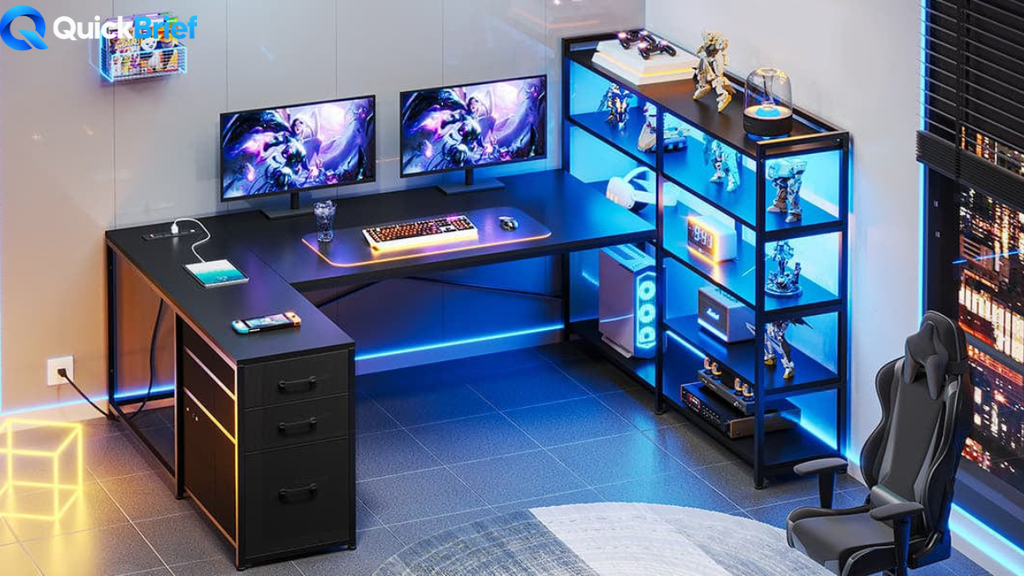
A useful gaming corner is more than a desk with a powerful computer. It works as a small system in which hardware, networking, software, and the physical environment support one another.
The physical side includes the gaming machine, display, input devices, audio equipment, furniture, lighting, cable organization, and ventilation.
The network side includes the internet connection, router, Ethernet or Wi-Fi connection, and the way other devices share the network.
The software side includes the operating system, game clients, drivers, firmware, security software, and networking configuration.
The human side also matters. A well-organized space can make it easier to access equipment, troubleshoot problems, and maintain the setup.
The ZAP Internet material discussing Gaming Corner emphasizes hardware consistency, network performance, seating, organization, events, and maintenance for a local gaming environment. Those details are best understood as setup recommendations rather than universal technical requirements.
Hardware and Display
The right hardware depends on the games being played.
A gaming PC may offer flexibility for graphics settings, upgrades, and a wide range of games. A console can provide a simpler experience with standardized hardware. A gaming laptop can provide portability, while mobile gaming requires a very different physical and network arrangement.
Displays also vary. Some players prioritize resolution, while others prioritize refresh rate and responsiveness.
The important principle is to match the hardware to the games and usage pattern instead of purchasing specifications that provide little practical benefit for the player’s needs.
Wired Ethernet Versus Wi-Fi
A wired Ethernet connection can be useful when consistency is a priority because it removes many of the variables associated with wireless signal strength and interference.
Wi-Fi can still work well for gaming, especially when the router is positioned appropriately and the wireless environment is strong. However, walls, distance, interference, router placement, and household traffic can affect wireless performance.
If a player experiences inconsistent gaming performance over Wi-Fi, testing the same device through Ethernet can help determine whether the wireless connection is contributing to the problem.
Router Placement
Router placement can have a surprisingly large impact on a home network.
A router placed in a central, unobstructed position generally has a better chance of providing useful coverage than one hidden behind furniture or positioned far from the devices that need it.
The CRTC notes that the number of devices connected to a router can also influence connection performance. A busy household therefore needs to be considered when evaluating a gaming network.
A Quick Comparison of Gaming Network Factors
| Factor | What It Means | Why Gamers Care |
| Download speed | Rate at which data is received | Useful for game downloads and updates |
| Upload speed | Rate at which data is sent | Important for streaming and uploads |
| Latency | Communication delay | Affects responsiveness |
| Jitter | Variation in latency | Can make real-time connections inconsistent |
| Packet loss | Data packets that fail to arrive | Can contribute to interruptions |
| Wi-Fi quality | Reliability of wireless connection | Can affect stability and responsiveness |
| Ethernet | Wired network connection | Often provides a consistent local connection |
| Network congestion | Competition for network resources | Can increase delays during busy periods |
| Router quality | Network-management capability | Influences how devices share the connection |
The table shows why gaming technology trends increasingly focus on the complete network experience rather than a single advertised speed.
How to Build a Better Gaming Corner at Home
Building a gaming corner does not necessarily mean replacing every component at once. A more practical approach is to identify the weakest part of the existing setup.
Start by observing what actually happens during gaming. If the game performs smoothly but downloads take a long time, bandwidth may be the relevant issue. If gameplay becomes unstable whenever someone else starts a large download, network congestion may deserve investigation.
If performance improves substantially when using Ethernet instead of Wi-Fi, the wireless connection may be the more relevant area to address.
If the connection appears stable but the game still has high latency, the distance to the relevant game server or the route taken across the internet may be contributing factors.
This diagnostic approach is more useful than automatically purchasing a more expensive internet package.
Reduce Unnecessary Network Traffic
Other devices can consume bandwidth while a game is running. Automatic cloud synchronization, large downloads, video streaming, operating-system updates, and game updates can all compete for network resources.
Managing those activities during gaming sessions can reduce unnecessary competition.
This is particularly relevant in households where several people use the same internet connection simultaneously.
Consider Quality of Service Features
Some routers include traffic-management features such as Quality of Service, commonly abbreviated as QoS.
These features can allow a network administrator to manage how different types of traffic share available capacity. However, QoS is not a magic solution, and its usefulness depends on the router, network design, internet connection, and configuration.
The goal should be to reduce congestion rather than simply turning on a setting because it contains the word “gaming.”
Keep Network Equipment Updated
Routers and other network equipment can receive firmware updates that improve security, compatibility, stability, or functionality.
Gaming devices should also be kept reasonably current.
A clean and updated system makes troubleshooting easier and reduces the possibility that an avoidable software issue is mistaken for an internet problem.
Gaming Corner Zap-Internet for Local Gaming Spaces
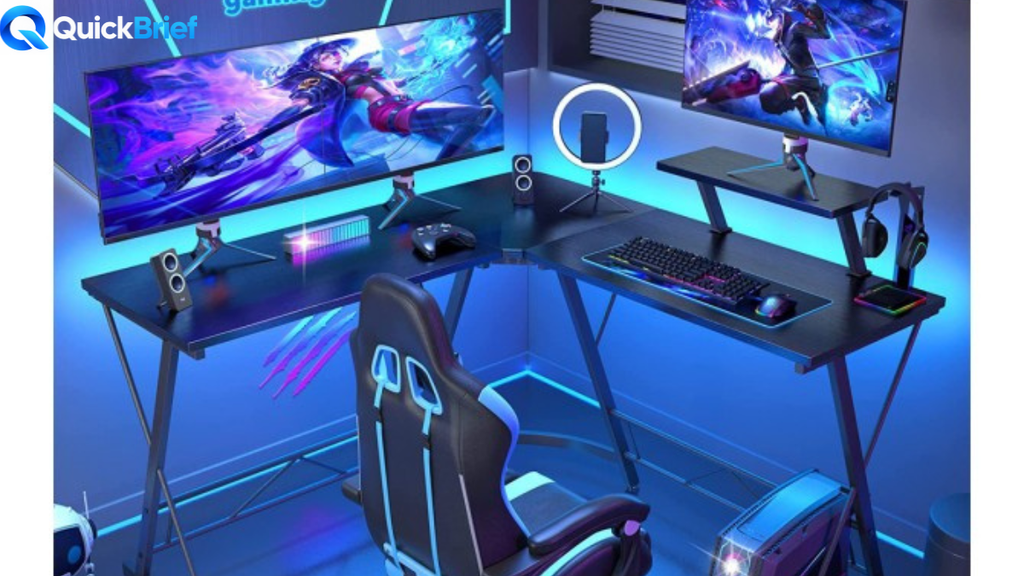
The phrase can also be interpreted in the context of a shared or public gaming environment.
ZAP Internet’s published Gaming Corner material describes a local gaming hub involving multiple stations, shared hardware, internet connectivity, social play, and organized events.
For a business or community space, networking becomes more complicated than it is in a single-player home setup.
Multiple computers and consoles may operate simultaneously. Players may download updates, stream gameplay, communicate through voice chat, and access online multiplayer services at the same time.
A shared gaming environment therefore needs careful network planning.
Hardware consistency can also simplify maintenance. If every station uses dramatically different equipment, troubleshooting becomes more complicated. Standardizing certain components can make replacement and support easier.
Physical organization matters as well. Cables should be managed safely, equipment should have sufficient ventilation, and controllers and headsets should be maintained between sessions.
Gaming Community and Social Play
Gaming is not exclusively about technical performance.
A gaming corner can also function as a social environment where people play together, discuss games, participate in local events, or watch competitive matches.
For a home setup, this might mean having enough space for friends to join a local multiplayer session.
For a community venue, it might mean organizing tournaments, casual gaming sessions, or other events.
The social side of gaming is particularly relevant to the broader idea of a gamer community. A well-designed space can make gaming feel less isolated by providing opportunities for people with shared interests to interact.
However, community management matters. Shared gaming spaces benefit from clear rules, respectful communication, appropriate moderation, and sensible privacy practices.
Gaming Guides and Tips for Troubleshooting Lag
When an online game feels slow or unstable, changing random settings can make troubleshooting harder.
A better process is to identify when the problem occurs.
If lag happens only in one game, the issue may be related to that game’s servers, routing, or software rather than the entire home network.
If every online game is affected, the home network or internet connection deserves closer attention.
If the problem occurs only when several household members are online, congestion becomes a stronger possibility.
If the problem disappears when using Ethernet, wireless performance becomes a relevant suspect.
Distance is another factor. The CRTC’s broadband measurements emphasize that latency depends partly on the distance between the user and the test server. Its research has also found measurable differences among access technologies and locations.
This is why a player should avoid assuming that a particular ping number is guaranteed simply because an internet plan has a certain download speed.
What Canadian Gamers Should Consider Before Upgrading
Before paying for a more expensive internet package, it is useful to understand the actual problem.
A player who downloads large games frequently may benefit from more bandwidth.
A player whose main problem is unstable Wi-Fi may get more value from improving local network coverage or using Ethernet.
A household experiencing congestion may need better traffic management or a different service tier.
A player located far from a game’s servers may continue to experience latency even after upgrading the local connection.
The CRTC’s recent policy changes are also making latency more visible in Canadian internet-service information. The Commission has directed that latency ranges be included in internet service offers by March 10, 2027, alongside other key service information.
This should make it easier for consumers to consider responsiveness alongside download and upload speeds when comparing services.
New Game Releases and Internet Requirements
New game releases can create additional pressure on a home internet connection.
Modern games can involve large downloads, frequent patches, online services, cloud synchronization, and live content updates. A household may therefore notice that gaming affects internet usage even when the actual gameplay itself does not consume enormous amounts of bandwidth.
This creates an important distinction between downloading a game and playing an online game.
A large game installation may benefit from high download bandwidth because the files can be transferred faster.
Once the game is running, however, responsiveness can depend more heavily on latency, stability, packet loss, server location, and network conditions.
Understanding this difference helps gamers avoid confusing download performance with gameplay responsiveness.
Gaming Industry Trends and the Future of Gaming Connectivity
Gaming continues to become more connected to online infrastructure.
Multiplayer games depend on remote servers. Game updates are distributed digitally. Streaming platforms allow players to broadcast their gameplay. Cloud-based services increasingly place processing and content delivery farther from the player’s device.
These developments make network performance increasingly relevant.
At the same time, internet infrastructure continues to evolve. Fibre expansion, wireless technologies, improved home routers, and better traffic-management systems can change what is practical for consumers.
The CRTC’s current focus on making latency information more transparent is one example of how the Canadian internet environment is evolving beyond a simple emphasis on advertised download speeds.
The future of gaming connectivity is therefore likely to involve several measurements and technologies working together rather than one universal “gaming internet” specification.
Common Misconceptions About Gaming Corner Zap-Internet
One misconception is that gaming corner zap-internet is automatically the name of a standardized internet technology. The available evidence does not establish that. The phrase appears in connection with ZAP Internet’s Gaming Corner content, but there is no evidence that it is a recognized networking standard.
Another misconception is that faster internet always means lower ping. Download capacity and latency are different characteristics.
It is also inaccurate to assume that fibre automatically guarantees perfect gaming performance. Fibre can provide excellent connectivity characteristics, but the player’s actual experience still depends on the complete network path, local equipment, routing, server location, and other conditions.
Finally, expensive gaming hardware cannot compensate for every network problem. A powerful graphics card can improve rendering performance, but it cannot remove internet latency.
My Opinion on Gaming Corner Zap-Internet
My view is that gaming corner zap-internet is most useful when treated as a concept for thinking about gaming as a complete environment rather than as a single technical product.
The documented ZAP Internet material uses Gaming Corner terminology for gaming-related spaces and connectivity-focused content. At the same time, the phrase does not appear to have the status of a universal networking standard.
For Canadian readers, the practical ideas behind the phrase are more valuable than the label itself. A gaming setup should be evaluated through measurable factors such as latency, stability, packet loss, Wi-Fi quality, bandwidth, hardware capability, and the conditions of the household network.
I would therefore avoid choosing an internet service simply because it is described as “gaming” or because it advertises an extremely high download speed. Looking at the actual characteristics of the connection and identifying the real bottleneck provides a more reliable basis for improving the online gaming experience.
Frequently Asked Questions About Gaming Corner Zap-Internet
What does gaming corner zap-internet mean?
Gaming corner zap-internet is best understood as a concept connecting a dedicated gaming environment with reliable internet performance. ZAP Internet has published material using Gaming Corner terminology for gaming spaces, connectivity, hardware, and social gaming activities. It is not established as a universal networking standard.
Is gaming corner zap-internet a specific internet technology?
The available information does not establish gaming corner zap-internet as a recognized internet technology or networking protocol. The phrase is used in ZAP Internet’s Gaming Corner content, while the underlying networking principles involve familiar concepts such as latency, bandwidth, Ethernet, Wi-Fi, jitter, and packet loss.
Does faster internet automatically reduce gaming lag?
No. Download speed and latency measure different aspects of an internet connection. Gaming performance can also be affected by jitter, packet loss, congestion, Wi-Fi conditions, routing, and the distance to the game server.
Is Ethernet better than Wi-Fi for gaming?
Ethernet can provide a more consistent local connection because it avoids many wireless interference and signal-strength variables. However, a well-configured Wi-Fi network can also support gaming effectively. Testing both connections can help identify whether Wi-Fi is contributing to a particular problem.
What should Canadian gamers check before upgrading internet?
Canadian gamers should consider the actual problem first. Check latency, connection stability, packet loss, Wi-Fi performance, household network usage, and available service technologies. The CRTC identifies fibre, cable, DSL, satellite, and fixed wireless among the internet technologies available in Canada, with availability varying by location.
Conclusion
Gaming corner zap-internet is best understood as a gaming-and-connectivity concept rather than a universally recognized technical standard. ZAP Internet uses Gaming Corner terminology for content involving gaming environments, hardware, connectivity, and social play, while the broader principles behind a strong gaming setup are based on established networking concepts.
For Canadian gamers, the most important lesson is that gaming performance cannot be judged by download speed alone. Latency, jitter, packet loss, network congestion, Wi-Fi quality, Ethernet connectivity, server distance, and the capabilities of the gaming device can all influence the final experience.
A sensible approach is to measure the problem before spending money. If Wi-Fi is the issue, improving the local connection may help. If household congestion is the problem, network management may be relevant. If large downloads are the bottleneck, additional bandwidth may be useful. If latency is caused by distance to a remote server, an expensive local upgrade may not completely solve it.
Ultimately, the value of the gaming corner zap-internet concept lies in treating the gaming setup as a complete system. Good hardware, a suitable physical space, and a reliable network can work together to create a smoother and more enjoyable online gaming experience and more.
